
Short answer: to manage social media for multiple brands without losing their voice, write a voice profile for each brand (tone, vocabulary, visual style, audience), plan all brands in one shared calendar, create content from each brand’s profile rather than from a generic template, approve and schedule in batches, and review performance per brand every month.
Agencies, franchise groups and companies with several product lines all hit the same wall. With one brand, a good social media manager keeps the voice consistent by instinct. With five brands, the voices start to blur. Posts for the premium brand sound like the budget brand, images reuse the same templates, and the calendar becomes a set of spreadsheets that nobody fully trusts.
The cause is rarely a lack of talent. It is a lack of system. When every post depends on one person remembering how each brand should sound, consistency breaks as soon as volume grows.
Why brand voice drifts across multiple accounts
- No written voice profile. The voice lives in someone’s head, so it changes with whoever writes that day.
- Shared templates. The same layout and phrasing get reused across brands because it is faster.
- Separate calendars. Each brand is planned in isolation, so nobody notices three brands posting the same idea the same week.
- Generic AI drafts. AI tools used without brand context produce the same polished but anonymous tone for everyone.
Step 1: Write a voice profile for every brand
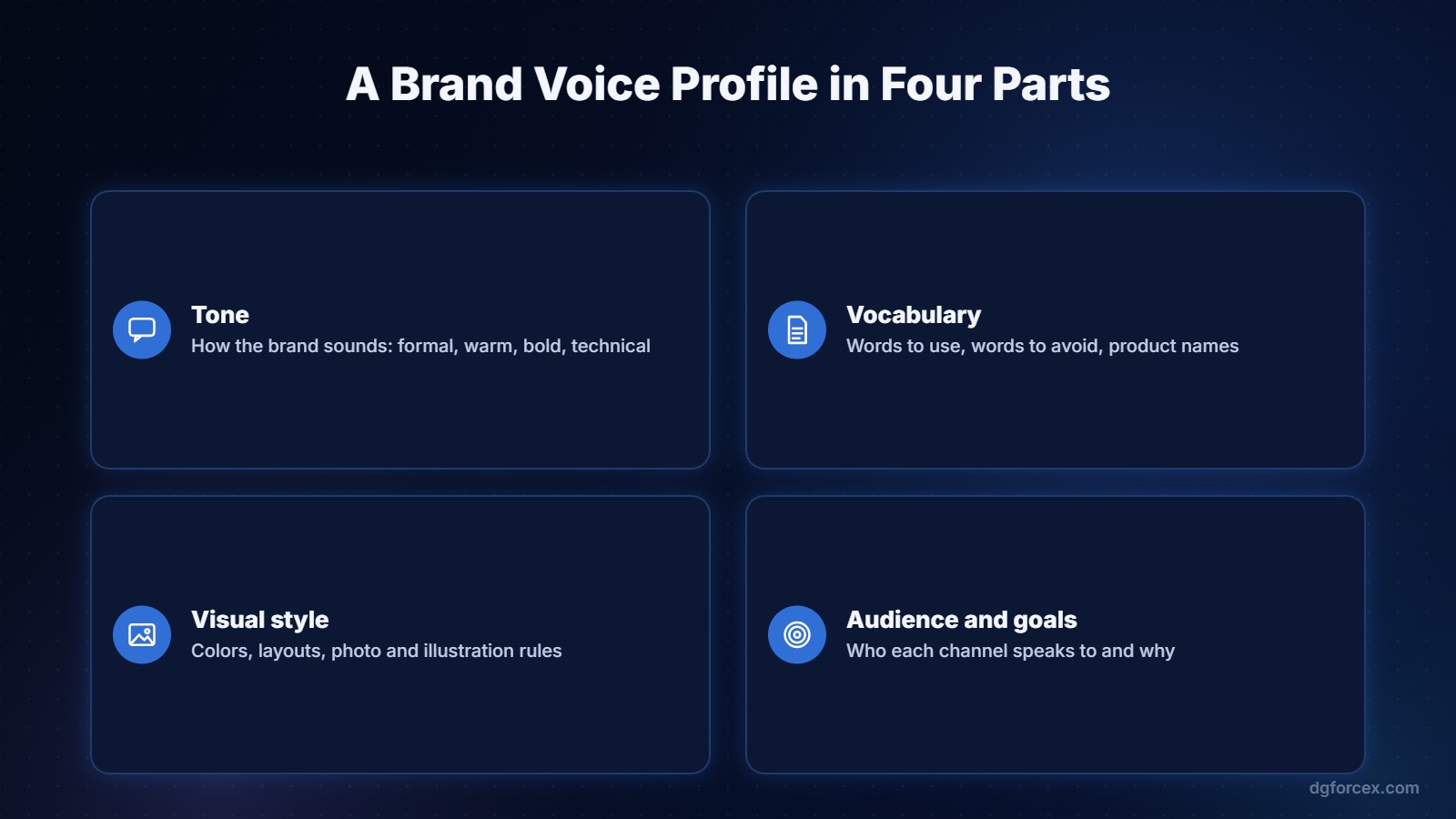
A voice profile does not need to be long. One page per brand is enough if it covers four things:
- Tone: three adjectives that describe how the brand sounds, plus three it should never sound like.
- Vocabulary: words and phrases the brand uses, words it avoids, and how it names its products.
- Visual style: colors, layouts, photography versus illustration, and how text appears on images.
- Audience and goals: who each channel speaks to and what a successful post achieves.
The best source material is the brand’s own best work: its website and its ten strongest past posts. Extract the patterns from them rather than inventing a voice from scratch.
Step 2: Plan every brand in one calendar
Use one calendar with a filter per brand. You will see the whole week at once, avoid duplicate themes, and spread workload across the team. Plan in monthly blocks with room for timely posts.
Step 3: Create from the profile, not from a template
Every draft, whether written by a person or generated by AI, should start from the brand’s profile. If you use AI, give it the profile and examples of past posts every time. This is the difference between AI content that sounds like the brand and AI content that sounds like everyone else; we discuss the wider problem in Why Most Brands Sound the Same.
Step 4: Approve and schedule in batches
Review a week or two of posts per brand in one sitting. Batching approvals is faster, and reviewers spot voice problems more easily when they read several posts together.
Step 5: Measure per brand and refine
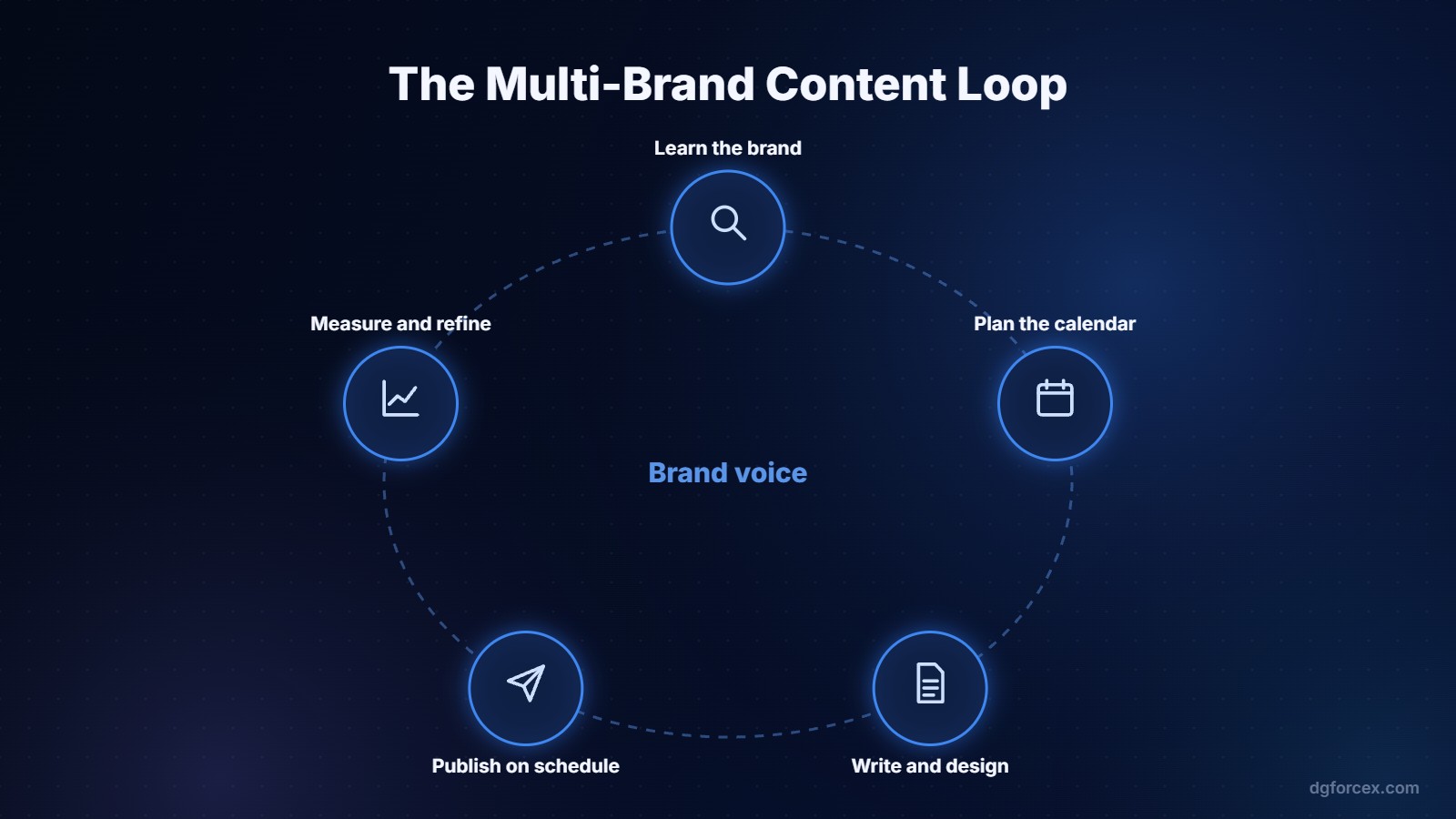
Compare each brand against its own history, not against the other brands. Update the voice profile when you learn what works: which topics, formats and tones perform best for that audience.
Where a dedicated platform helps
Once you manage more than two or three brands, the manual version of this system becomes a full-time job. That is why we build Post Machine at DGforceX: an AI platform for planning, creating and publishing social media content for multiple brands from one place. It learns each brand’s voice and visual style from its website and past posts, writes posts and generates on-brand images, and publishes on schedule to LinkedIn, Facebook and Instagram. Because every organization works differently, we set it up and customize it for each client rather than offering a generic self-serve tool.
If your team is also bringing employees into the mix, see our follow-up guide: Employee Advocacy on LinkedIn: A Practical System for Consistent Posting.
Run every brand from one place
Post Machine is built and customized by DGforceX for each organization. Tell us about your brands and channels and we will prepare a quote.
Already a client? Sign in to the Post Machine app.
FAQ
How many brands can one social media manager handle?
It depends on posting frequency and channels, but without a system most people struggle beyond three or four active brands. Voice profiles, one calendar and batch approvals raise that number significantly.
What is a brand voice profile?
A short document that defines how a brand sounds and looks: tone, vocabulary, visual style and audience. It is the reference for everyone who creates content.
Can AI keep different brand voices consistent?
Yes, if it is given each brand’s profile and examples of its past content every time. Without that context, AI drafts tend to sound generic.
Should every brand post on every channel?
No. Choose channels per brand based on where its audience is. A B2B brand may focus on LinkedIn while a consumer brand leans on Instagram.
How often should a voice profile be updated?
Review it every quarter, or whenever performance data shows a clear pattern in what resonates.

DGforceX is a digital growth Hub. We combine marketing strategy, AI, web development and cyber risk expertise to help businesses build, grow and protect their digital presence.