

Short answer: angel investors manage early-stage deal flow by writing down a clear thesis (sectors, stages, markets, business models and check size), filtering every incoming startup against it before reading the details, keeping a short pipeline of saved companies, and using a consistent first-look checklist so decisions are fast and comparable.
Deal flow sounds like a good problem to have until you have it. Once people know you invest, startups arrive from every direction: introductions from friends, pitch events, LinkedIn messages, demo days, emails with a deck attached. Most of them are not a fit. Reading each one properly takes time, and saying no politely takes more. The result is either an overflowing inbox or rushed decisions.
The most effective angels and early-stage investors do not read more decks. They read fewer, because they filter earlier.
Start with a written thesis
A thesis is a short description of what you invest in and why. It does not have to be elaborate. It needs to be clear enough that you, and the founders who read it, can tell in seconds whether a startup fits.
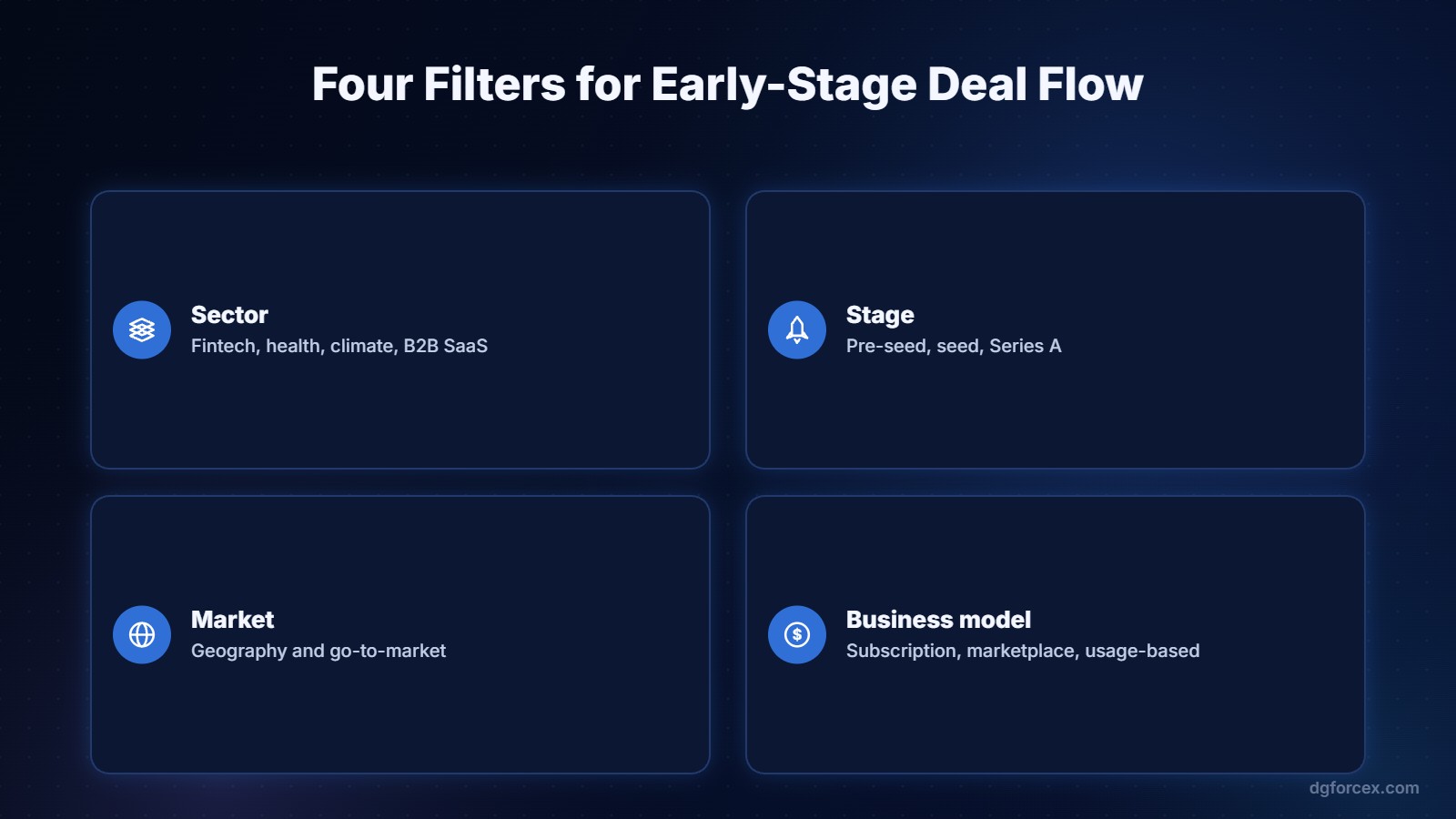
- Sector: the industries you understand and can help in.
- Stage: pre-seed, seed or Series A, and what traction you expect at each.
- Market: the geographies and go-to-market motions you are comfortable with.
- Business model: subscription, marketplace, usage-based, hardware and so on.
- Check size and role: how much you invest and whether you lead, follow or join syndicates.
A first-look checklist for every startup
Once a startup passes the thesis filter, use the same short checklist each time. Consistency makes comparisons possible and protects you from being swayed by presentation alone.
- Problem: is it real, frequent and painful for a specific customer?
- Team: why are these founders the right people to solve it?
- Evidence: what traction, pilots or customer interviews support demand?
- Model: how will it make money, and does the unit economics logic hold?
- Round: how much are they raising, on what terms, and what milestones will it fund?
Many early ideas fail on the first point. A useful lens is whether the founders validated the problem before building, a topic we discuss in From Ideas to Scalable Platforms: Strategy Building with AI.
Keep a small, active pipeline
Save the startups that pass the first look into a short pipeline with a status for each: reviewing, meeting, diligence, decided. Limit how many are active at once. A pipeline of seven companies you actually follow beats a folder of seventy decks you never reopen. Give a clear answer to the rest, quickly; founders value a fast no.
Make it easy for the right founders to find you
The best way to improve deal flow is to attract better-matched startups in the first place. Publish your thesis, be specific about stage and sector, and be present where founders look for investors. Founders face the mirror-image challenge, which we cover in How Early-Stage Founders Reach the Right Investors Without Cold Outreach.
Filtering deal flow on a platform
NexioX is a private platform built around this kind of filtering. Investors can browse and search startup profiles by country, sector, funding stage, business model and other criteria, save the ones that fit, and send connection requests. Startup profiles are structured the same way, covering team, stage, market and business model with media and pitch materials, so first looks are faster and comparable. Messaging happens inside the platform once a connection is accepted, with no public contact details, and one account can hold both an investor and a founder profile.
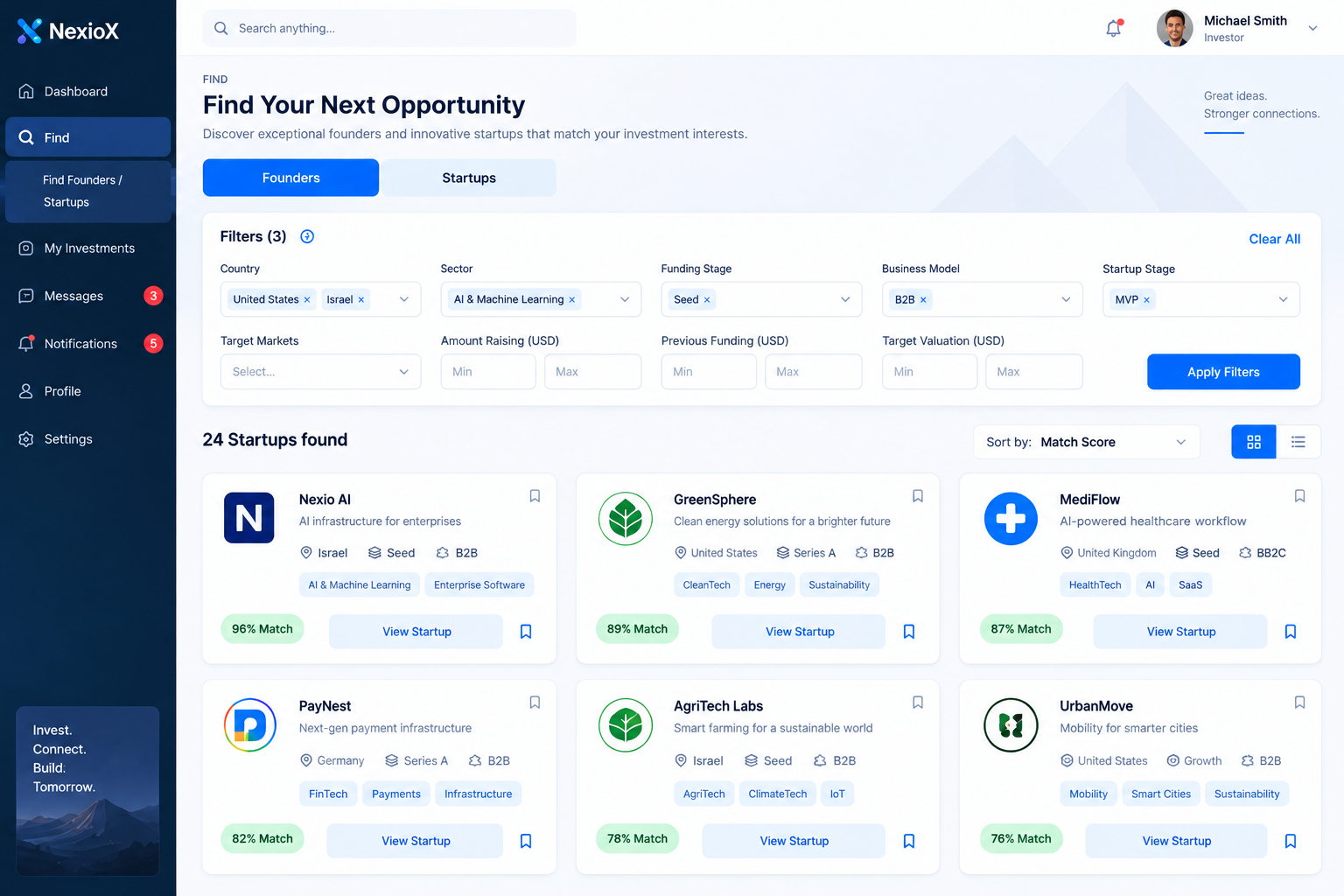
See only the startups that fit your thesis
Filter early-stage startups by sector, stage, market and business model, and connect privately.
Want to start browsing? Create your NexioX account.
FAQ
What is deal flow?
Deal flow is the stream of investment opportunities an investor receives and reviews, from introductions, events, platforms and direct outreach.
What should an angel investment thesis include?
Sectors, stages, markets, business models, check size and the role you want to play in a round.
How many startups should an angel review?
Filter widely but review deeply only a few. Many angels look at dozens of startups to make one or two investments a year.
How can investors improve deal flow quality?
Publish a specific thesis, use platforms with structured startup profiles, and ask founders and co-investors for referrals that match the thesis.
Should angels respond to every startup?
Ideally, yes, with a short and fast answer. A quick, polite no builds your reputation with founders.

DGforceX is a digital growth Hub. We combine marketing strategy, AI, web development and cyber risk expertise to help businesses build, grow and protect their digital presence.