Short answer: a useful brand monitoring brief tracks a short list of names (your brand, products, executives, competitors and a few industry terms), collects mentions from news and chosen feeds, scores each one for relevance, sentiment and importance, and delivers the top five to ten items every morning, with facts separated from interpretation and a link to every source.
Most brand monitoring fails for the same reason: too much of it. Someone sets up alerts for the company name, the inbox fills with hundreds of irrelevant mentions, and within a month nobody opens them. Meanwhile the one article that mattered, a competitor’s funding round or a negative review from an industry analyst, gets lost in the pile.
The goal is not to see everything. It is to make sure the right people see the few things that matter, quickly, in a format they will actually read.
What a B2B brand monitoring program should cover
- Your brand and products: including common misspellings and product names that have generic meanings.
- Your executives: interviews, quotes, conference appearances and anything that could become a reputation issue.
- Competitors: funding, launches, partnerships, leadership changes and customer wins.
- Industry keywords: regulation, category terms and topics your buyers care about.
- Specific sources: trade publications and blogs your market reads, via their RSS feeds.
Mentions are also a mirror of your positioning. If coverage describes you with the same words used for every competitor, that is a messaging problem worth solving; we explored this in Why Most Brands Sound the Same.
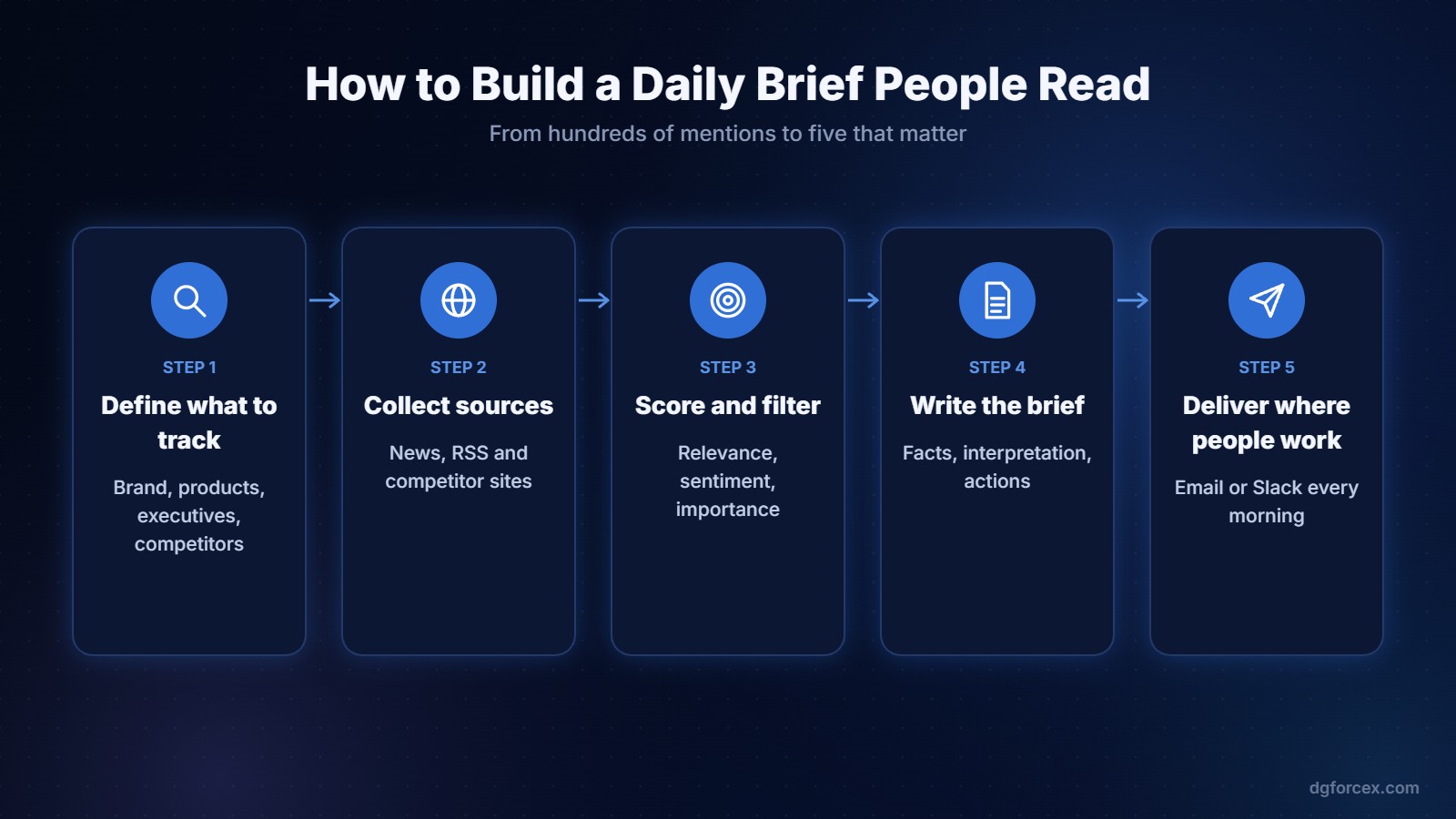
How to build a daily brief people read
1. Define what to track, precisely
Write your keyword list with exclusions. If your brand name is also a common word, combine it with category terms. Keep the list short at first; it is easier to add than to clean up.
2. Collect from the right sources
News aggregators cover most of the market. Add RSS feeds for the five to ten publications that matter most in your niche, and monitor competitor websites separately, as we describe in our guide on tracking competitor pricing and website changes.
3. Score and filter
Every mention needs three judgments: is it relevant, what is the sentiment, and how important is it? A trade publication interview with your CEO is important. A syndicated press release copied to forty sites is one item, not forty.
4. Write the brief in a fixed structure
Keep the same format every day so people know where to look:
- Top items: five to ten mentions, each with one line of what happened and a source link.
- What it might mean: interpretation, clearly separated from the facts.
- Suggested actions: a reply, a sales talk track update, a post to share.
Separating verified facts from interpretation matters. People trust a brief that never mixes the two.
5. Deliver where people already work
Email first thing in the morning or a post in a Slack channel works far better than a dashboard that requires a login. Add a weekly summary for leadership with trends rather than individual items.
Who should get what
- Founders and management: the short daily brief and a weekly trend summary.
- Marketing and product marketing: competitor launches and messaging shifts.
- Sales and business development: news about target accounts and competitors before customer calls.
- PR and communications: every brand and executive mention, with sentiment.
Automating the brief without losing quality
A person can produce this brief by hand, but it takes an hour a day and stops the first week that person is on holiday. This is where tooling earns its place.
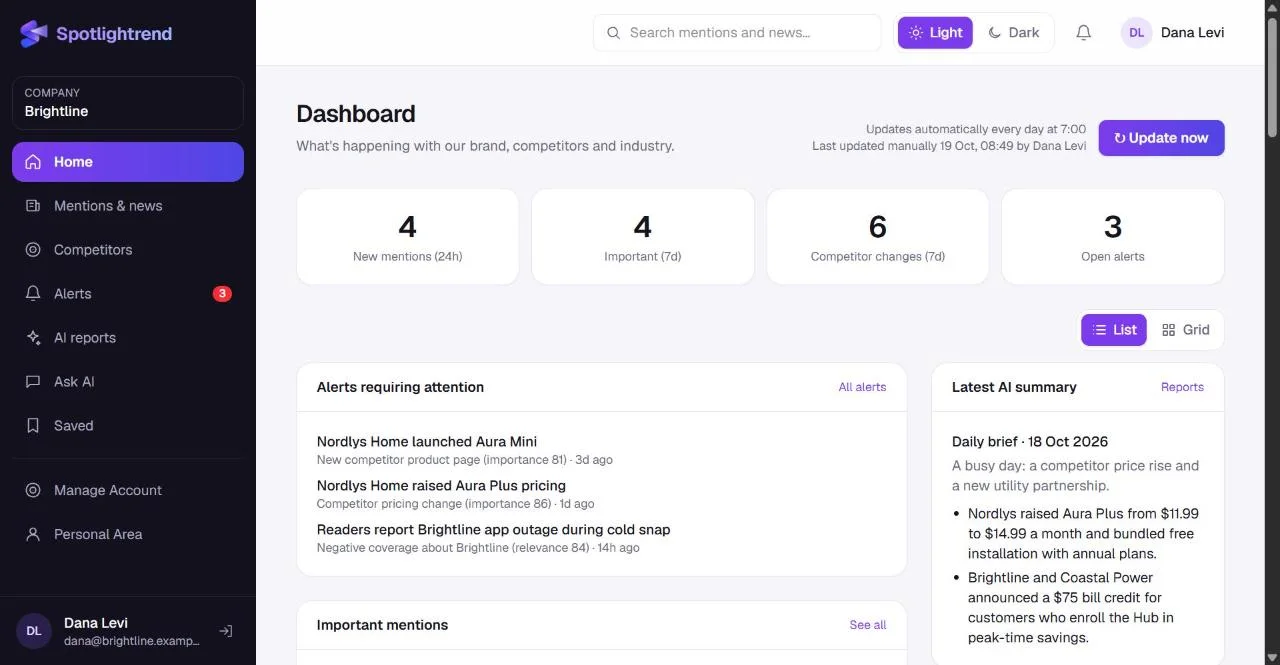
Spotlightrend collects mentions from Google News and your own RSS feeds in any language, matched to your brand, products, executives and industry keywords. AI scores each mention for relevance, sentiment and importance, and reports keep verified facts apart from interpretation and opportunities, with numbered sources. Daily and weekly digests arrive in the app, by email or in Slack, and the team shares bookmarks, notes and reports in one place.
Get a daily brief your team actually reads
Set up your brand, competitors and keywords in minutes. Sources are checked automatically every morning.
Want to start now? Sign up for Spotlightrend.
FAQ
What is brand monitoring?
Brand monitoring is the ongoing tracking of mentions of your company, products, executives and competitors across news and other sources, so you can respond to opportunities and risks quickly.
How many items should a daily brief include?
Five to ten. If the brief regularly has more, tighten your keywords or raise your importance threshold.
Should brand monitoring include competitors?
Yes. Competitor funding, launches and partnerships are often the most actionable items in the brief.
Why separate facts from interpretation?
It keeps the brief trustworthy. Readers can act on facts immediately and treat interpretation as a starting point for discussion.
Can brand monitoring work in several languages?
Yes. Collect mentions in every language your market uses and summarize them in the language your team reads.

DGforceX is a digital growth Hub. We combine marketing strategy, AI, web development and cyber risk expertise to help businesses build, grow and protect their digital presence.