Investors read a lot of startup descriptions. Every intro email, every profile on a platform, every deck starts with a sentence that tries to explain what the company does. Most of those sentences fail in the same way. They are long, abstract and full of words that could describe any company: “AI powered platform”, “revolutionizing”, “seamless”, “ecosystem”.
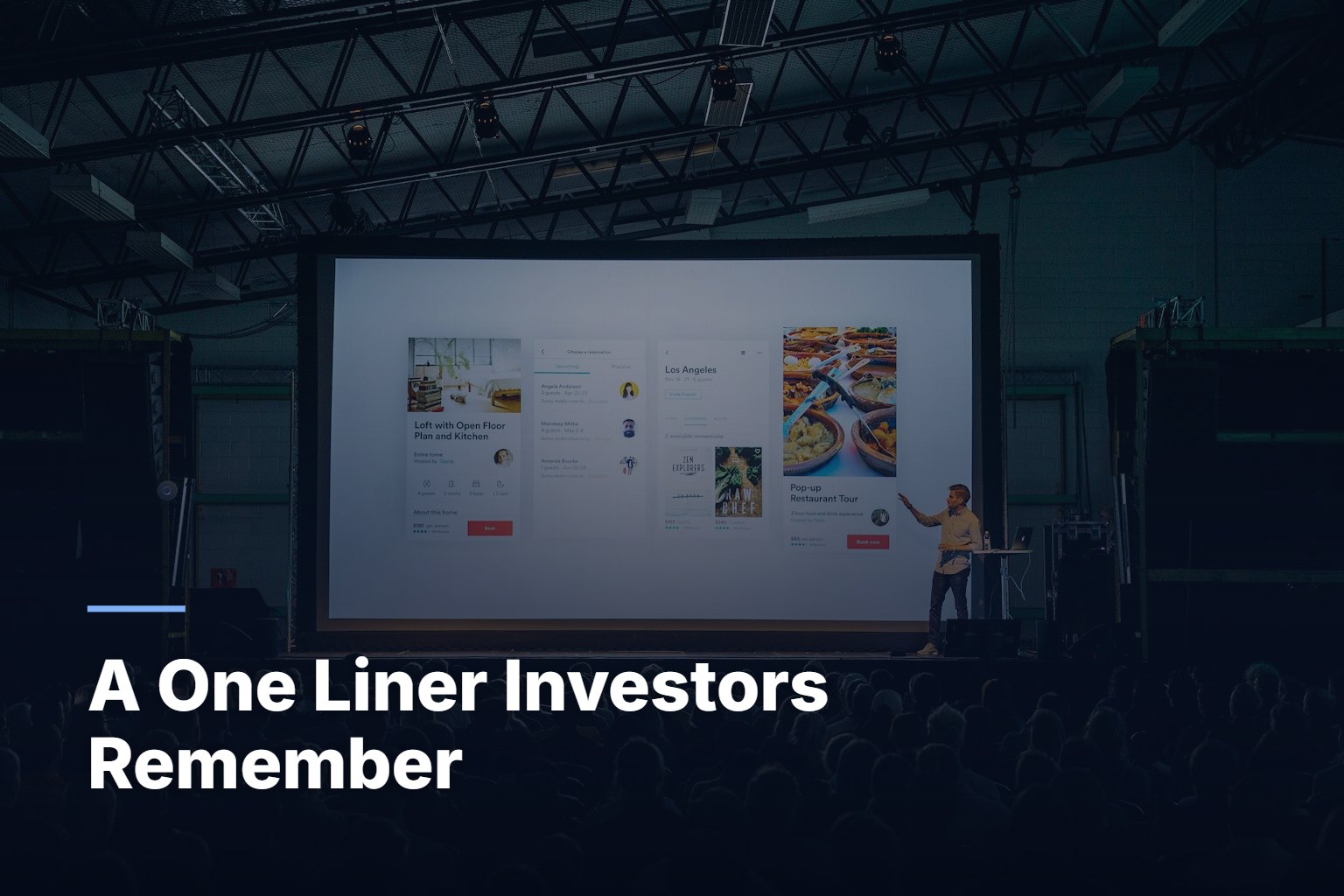
The one liner matters more than it seems. It is often the only thing an investor reads before deciding whether to read anything else. It is also what they will repeat to a partner if they are interested. If they cannot repeat it, the conversation stops there.
What a good one liner does
A strong one liner answers three questions in a single sentence: who is the customer, what problem do they have, and what do you do about it. Ideally it also hints at why your approach is different. It uses plain words, avoids jargon and could be understood by a smart person outside your industry.
A simple formula gets most founders close: We help [specific customer] [do something or solve a problem] by [how you do it].
It is not glamorous, and that is the point. Clarity beats cleverness every time at this stage.

Before and after
Examples make the difference obvious.
Before: “An AI powered platform transforming the future of work through intelligent collaboration.” After: “We help construction subcontractors get paid faster by automating the approval paperwork general contractors require.”
Before: “A next generation fintech ecosystem for the underserved.” After: “We give freelance drivers in Brazil instant access to their earnings through a debit card linked to the delivery apps they work for.”
Before: “Revolutionizing healthcare with data driven insights.” After: “We help small physiotherapy clinics fill cancelled appointments by automatically offering the slot to patients on a waitlist.”
Each after version names a real customer, a real problem and a concrete mechanism. An investor reading it knows within seconds whether the company fits their focus.
Write it for the inbox
Most one liners are first read in a crowded inbox or on a phone between meetings. That shapes how they should be written. Put the customer and the problem early, so someone skimming still understands. Keep it under about twenty five words. Avoid acronyms unless every investor in your space knows them. And read it on a phone screen to see how it looks in the preview.
If you have a strong number, it can work as a second sentence: “Forty clinics use it today, and they fill an average of 70% of cancelled slots.” Traction belongs after the description, not instead of it.
Mistakes that make founders sound vague
Leading with technology. “We use machine learning to…” tells the investor how, before they know what or for whom. Technology can come later, if it is a real advantage.
Describing the vision instead of the product. “We want to make every company data driven” is an aspiration. Investors want to know what you sell today.
Choosing too broad a customer. “Businesses” or “consumers” is not a customer. “Independent pharmacies in the UK” is.
Using comparisons that confuse. “Uber for X” was popular for a reason, but it has been overused to the point of meaning little. Use comparisons only when they genuinely clarify.
Stacking buzzwords. If you removed the words AI, platform, seamless and innovative, would the sentence still say something? If not, rewrite it.
Rewrite until it is simple
A good one liner rarely comes out right the first time. Write ten versions. Cut each one by a third. Then test them.
The best test is human. Read the sentence to someone who does not know your company and ask them to explain it back in their own words. If what they say matches what you do, you are close. If they hesitate or get it wrong, the sentence is not doing its job. Try it on a few people: a friend, a potential customer, an advisor, another founder.
Another useful test is whether the sentence still works without your company name. If someone could forward it to a colleague with “check out this company” and the colleague understands immediately, it works.
Use the same sentence everywhere
Once you have a one liner that works, use it consistently: in your investor profile, your deck’s first slide, your LinkedIn headline, your email signature and the intro you ask others to forward. Consistency helps people remember you, and when an investor hears the same clear description from two different sources, it builds credibility.
The one liner is the doorway. Behind it, investors look for the team, the problem, the evidence and the ask, which we covered in What Investors Look For in a Pre-Seed Startup Profile. How you get that sentence in front of them matters too. Warm introductions and investor platforms each have a role, and we compare them in Warm Introductions vs Investor Platforms.
Put it where investors are looking
A clear one liner works hardest on a platform where investors browse startups by sector and stage. On NexioX, founders publish a startup profile that leads with exactly this kind of description, discover investors who are a relevant fit and start conversations with them directly, all in one private platform.
Make your first sentence count
Publish your startup profile and let the right investors find a description they can understand in seconds.

DGforceX is a digital growth Hub. We combine marketing strategy, AI, web development and cyber risk expertise to help businesses build, grow and protect their digital presence.