Artificial Intelligence is everywhere. Tools generate content, answer questions, automate emails, and analyze data.
But most companies are still using AI in a very limited way.
They use it as a smarter assistant.
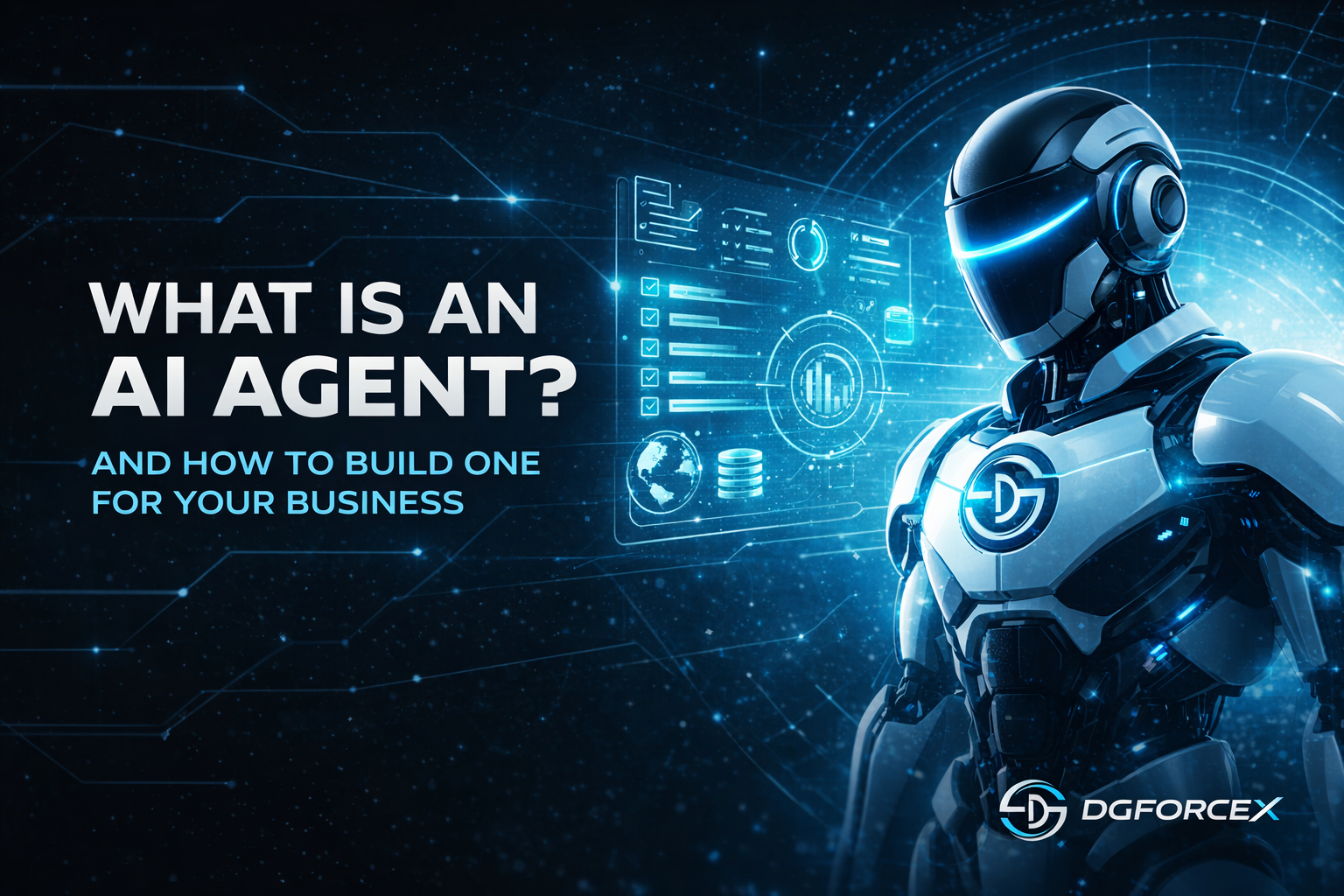
An AI agent is something different.
An AI agent is a digital worker designed to take a goal and execute tasks to achieve it. It doesn’t just respond to a single prompt. It can plan steps, access information, use tools, make decisions within defined rules, and complete multi-stage processes.
Instead of asking AI one question at a time, you define an outcome. The agent handles the execution.
That shift changes how companies operate.
AI Agent vs. Chatbot
A chatbot answers.
An AI agent acts.
A chatbot waits for input. It responds, and then it stops. An AI agent can continue working toward a defined objective.
For example, instead of prompting:
“Summarize these leads.”
You can define:
“Every morning, review new inbound leads, check if they match our ideal customer profile, enrich missing data, and send a prioritized summary to sales.”
An AI agent can perform that entire flow automatically. It pulls the data, analyzes it, applies decision logic, and executes the final action.
It behaves less like a search engine and more like a junior operations employee.
Can AI Agents Replace Multiple Roles?
In many cases, yes at least partially.
Modern businesses are filled with repetitive cognitive tasks. Reviewing documents. Researching companies. Updating CRM systems. Drafting follow-ups. Monitoring changes. Preparing reports.
Individually, these tasks are simple. Collectively, they consume hours of work every day.
A properly designed AI agent can handle these workflows faster and without context switching. What might take several people a few hours can often be completed in minutes. Not because the agent “thinks” better than humans, but because it processes structured tasks without fatigue and without delay.
This doesn’t mean replacing entire teams. It means increasing output per employee and removing operational bottlenecks. Teams spend less time on repetitive processes and more time on strategy, creativity, and high-impact decisions.
The leverage is significant.
One well-structured AI agent can function as a 24/7 digital operator inside your business.
Where Do You Build an AI Agent?
This is where many companies get confused.
AI agents are not tied to a single platform.
You can build AI agents inside platforms like ChatGPT or Gemini using their advanced capabilities and APIs. These environments allow you to define instructions, connect data, and create structured behaviors.
But AI agents do not have to live in one interface.
More advanced implementations operate across platforms. They connect to your CRM, email system, internal database, Slack, support tools, marketing platforms, and analytics dashboards through APIs and automation layers.
In other words, the model is only one part of the equation.
The real power of an AI agent comes from integration.
An isolated AI model that cannot access your systems is limited. A connected agent that can read, write, analyze, and trigger actions across your infrastructure becomes a true operational asset.
How to Build an AI Agent the Right Way
Most companies start in the wrong place. They begin with the model.
The correct starting point is not technology. It is clarity.
You begin by defining the outcome. What specific task or responsibility should this agent own? Lead qualification? Sales research? Customer support triage? Internal reporting? Competitive monitoring?
The more clearly defined the objective, the more effective the agent will be.
Next, you define its environment. What data can it access? What systems can it interact with? What tools can it use? An AI agent without access is like an employee without permissions.
Then you define its boundaries. What rules guide its decisions? What should it escalate? What actions require approval? This is critical for maintaining control and reducing risk.
After that comes integration. The agent must connect to execution layers such as CRM platforms, email systems, marketing tools, project management software, or internal databases. This is where APIs and automation frameworks play a central role.
Finally, you implement monitoring and feedback. An AI agent should not operate in a black box. You need visibility into its actions, performance metrics, and outputs. Over time, you refine the logic and improve accuracy.
Building an AI agent is less about writing prompts and more about designing digital infrastructure.
Single-Platform vs. Cross-Platform Agents
Some businesses start small by building agents within a single ecosystem, such as ChatGPT or Gemini. This is a practical way to prototype ideas and test workflows.
However, as operational needs grow, cross-platform agents become more valuable.
A cross-platform AI agent can retrieve data from one system, process it through an AI model, and update another system automatically. For example, it might analyze support tickets from a helpdesk tool, detect urgent cases, update your CRM, and notify the relevant team in Slack.
That level of orchestration is what turns AI from a novelty into an operational advantage.
The model itself can vary. Some companies use OpenAI models. Others use Google’s Gemini. Some use open-source alternatives. The architecture can be flexible.
What matters is the design.
The Real Opportunity
The real opportunity with AI agents is not automation for the sake of automation.
It is operational leverage.
When designed correctly, AI agents reduce manual workload, accelerate execution, and create consistency across processes. They eliminate delays caused by task switching and repetitive coordination. They allow teams to scale output without scaling headcount at the same rate.
Companies that treat AI agents as strategic infrastructure gain compounding advantages. They move faster. They analyze more data. They respond more quickly. They reduce operational friction.
Companies that treat AI as a simple content generator miss that opportunity.
An AI agent is not magic. It is structured intelligence connected to execution.
It can replace repetitive work previously distributed across multiple roles. It can complete tasks in a fraction of the time. It can operate continuously. But its effectiveness depends entirely on how well it is designed and integrated.
The question is not whether AI agents will become standard in business operations.
The question is whether your company will build isolated tools or intelligent digital workers embedded directly into your workflow.

Ariel Gal is a digital strategist specializing in scalable web platforms, SEO architecture, automation, and AI-enabled growth. His work focuses on turning complex digital systems into reliable business infrastructure.