For twenty years, the path from a question to a business was predictable. Someone typed a few words into a search engine, scanned ten blue links, clicked two or three, and maybe filled in a form. Businesses competed for those links, and an entire industry grew around winning them.
That path is changing quickly. Today a growing share of people ask their question to an AI assistant, or read an AI generated overview at the top of the results page, and get a complete answer without clicking anything. When they do click, it is often on one of the few sources the AI mentioned. For businesses, the question is no longer only “do we rank?” but also “are we part of the answer?”
What is actually different
Traditional search returns a list and lets the user decide. AI search reads many sources, combines them and returns a single response. That has a few consequences that matter for any business that relies on being found online.
Fewer clicks. When the answer is on the screen, people click less. Informational queries such as “how to”, “what is” and “best way to” are affected most.
Fewer winners. A results page has ten organic positions. An AI answer might mention three brands, or none.
Longer questions. People talk to AI assistants in full sentences, with context. “Which accounting software works for a five person design studio in Germany that invoices in two currencies?” is a normal query now.
Reputation beyond your website. AI systems draw on reviews, forums, news, comparison sites and social posts, not only on your own pages.
How AI assistants decide what to mention
No one outside the companies building these systems knows the exact rules, and they change often. But the patterns are clear enough to act on.
AI answers lean on content that is clear and specific. A page that states plainly what a product does, who it is for, what it costs and how it compares is easier to use than a page full of slogans. They favour sources that look credible: consistent information across many sites, real reviews, named authors and up to date details. They reward structure, such as headings that match real questions, short direct answers near the top of a page, and lists and tables where they make sense. And they pick up mentions. A business that is discussed on industry sites, in comparisons and in communities is more likely to be named than one that only talks about itself.
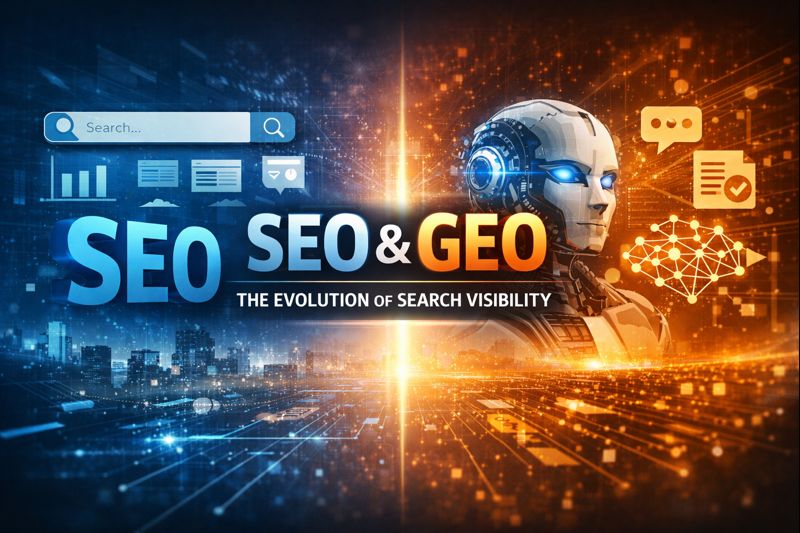
We went deeper into the shift from classic SEO to what many now call generative engine optimization in SEO and GEO: How Search Visibility Is Evolving in the Age of AI.
What to do about it
The good news is that most of the work overlaps with good marketing practice. The difference is in emphasis.
Answer real questions directly. Collect the questions customers ask in sales calls, support tickets and reviews. Write pages that answer them in the first two sentences, then go into detail. Avoid hiding the answer behind a long introduction.
Make your basics unmistakable. Your homepage and main product pages should say what you do, for whom, where and at what price range, in plain language. If a human needs to read three paragraphs to understand your offer, an AI will struggle too.
Keep information consistent everywhere. Your business name, address, opening hours, services and pricing should match across your website, Google Business Profile, directories and social profiles. Contradictions reduce trust.
Earn mentions outside your own site. Reviews, guest articles, partner pages, podcast appearances and inclusion in comparison lists all create the external signals AI systems rely on.
Do not neglect the technical side. AI crawlers still need to reach and read your pages. A slow, script heavy site that hides content behind interactions is harder to use. Our guide to Core Web Vitals and site speed covers the essentials.

Local businesses can actually benefit
Small and local businesses often assume AI search favours big brands. In practice, it often helps specialists. When someone asks a detailed, local question, such as a physiotherapist in their neighborhood who works with runners, a general national brand is not a good answer. A local clinic with a clear website, good reviews and a page about running injuries is.
The more specific your offer and the better you describe it, the more likely you are to match these longer, more detailed questions.
Measuring visibility when clicks go down
One uncomfortable side effect of AI search is that traditional metrics become less reliable. Organic traffic may fall even when your visibility in answers is growing. A few practices help.
Track branded search and direct traffic, which often rise when people hear about you in an AI answer and then look you up. Ask new leads how they found you, and include AI assistants as an option. Regularly test the questions your customers ask in the main AI tools and note whether you are mentioned. And invest in channels you own, such as email lists and communities, so you depend less on any single discovery platform. We explain why that matters in First Party Data After Cookies: A Practical Plan for Marketers.
Where this is heading
AI search will keep changing, and anyone who claims to have a fixed formula for it is guessing. What is unlikely to change is the direction: people want answers, not lists, and the systems that give those answers will favour businesses that are clear, credible and widely discussed. That is a standard worth meeting whatever the next version of search looks like.

DGforceX is a digital growth Hub. We combine marketing strategy, AI, web development and cyber risk expertise to help businesses build, grow and protect their digital presence.