Disclaimer: This content is for informational purposes only and does not constitute legal advice. The use of AI-generated characters and digital identities may be subject to local laws and platform policies. You should consult with a qualified legal professional to understand your specific obligations and risks.
Not long ago, using a non-real identity online was a liability.
Platforms like Facebook and LinkedIn actively removed profiles that didn’t represent real individuals. These “fake profiles” were associated with spam, manipulation, or anonymity, and in many cases, they were blocked quickly and without much discussion.
Today, the reality looks very different.
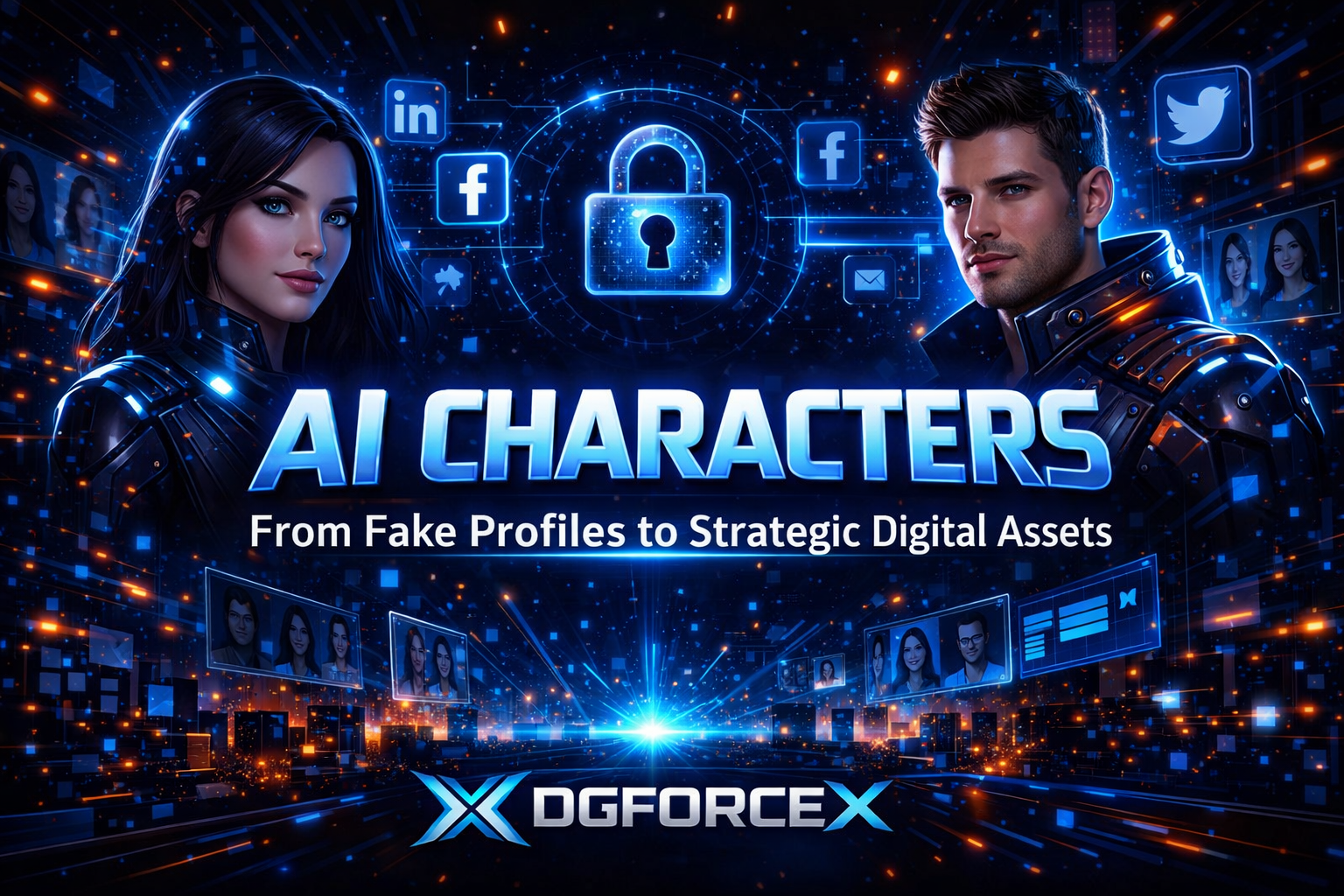
We are entering a new phase of the digital ecosystem where AI-generated characters are not only accepted, but increasingly used as part of strategic brand and marketing systems. What used to be suspicious is now, in many cases, considered innovative.
This shift is not just technological. It’s structural. And it raises an important question:
How did we move from banning fake identities to building brands around them and is it actually legal?
From Fake Profiles to AI Personas
AI characters, sometimes called virtual influencers, digital personas, or synthetic identities are non-real individuals created using artificial intelligence, design systems, and automation tools.
Unlike anonymous profiles from the past, these are often highly structured. They have consistent messaging, defined positioning, and clear roles within a brand or business. Some create content, others represent companies, and some are used as scalable communication layers across platforms.
In many cases, they are indistinguishable from real people at first glance.
This is where the shift becomes significant. The issue is no longer whether the identity is real, but how it is used and how it is perceived.
What Changed?
The transformation didn’t happen because platforms suddenly changed their philosophy. It happened because technology evolved faster than enforcement models, and new use cases emerged.
AI made it easy to create realistic visuals, natural language communication, and consistent behavior at scale. What once required significant effort can now be built and deployed in hours.
At the same time, the intent behind these identities began to shift. Instead of being used primarily to hide or manipulate, many AI characters are now used for branding, content creation, and user engagement. They are designed, not hidden.
Platforms, in response, have gradually shifted their focus. Rather than targeting whether an identity is “real,” they increasingly focus on behavior misleading activity, harmful content, and coordinated manipulation.
This creates a gray area where AI characters are not automatically blocked, as long as they operate within broader platform guidelines.
Looking forward, it’s very likely that this will become more formalized. We may soon see platforms like LinkedIn, Facebook, and others introduce clear frameworks where users can declare that a profile is AI-generated. In such cases, the identity would not be restricted, as transparency is established upfront.
At the same time, profiles that claim to represent real individuals will likely continue to require identity verification, just as they do today. This creates a dual system: verified human identities on one side, and declared AI-generated identities on the other.
Is It Legal?
The legal aspect is complex and still evolving.
There is no single global rule that defines AI characters as legal or illegal. Instead, legality depends heavily on context, intent, and execution.
In general, creating and using AI-generated personas is allowed, especially when used for branding, content, or communication. However, risks begin to appear when these identities cross into areas such as misrepresentation, impersonation, or deception.
If an AI character is presented in a way that leads users to believe it is a real person especially in situations involving trust, influence, or financial decisions this can raise legal concerns. The same applies if the character resembles or imitates a real individual without permission.
The key factor across most jurisdictions is transparency. When users understand what they are interacting with, the risk is significantly reduced. When they don’t, exposure increases.
The Ethical Layer
Even if something is technically allowed, it doesn’t mean it’s strategically sound.
AI characters introduce a new layer of ethical considerations around trust, authenticity, and influence. A brand can scale content and engagement using AI, but if users later feel misled, the long-term damage can outweigh the short-term gain.
There is also a question of accountability. A real person carries reputation and consequences. A digital character can be changed, reset, or removed. This creates an imbalance that brands need to manage carefully.
In practice, the most important factor is not whether the character is AI—but whether the interaction feels honest.
Why Companies Are Adopting AI Characters
Despite the complexity, adoption is accelerating.
AI characters offer something that traditional systems cannot easily match: scale with consistency. They can produce content continuously, maintain a unified tone, and operate across multiple channels without fatigue.
They also provide full control. Unlike human influencers or external partners, AI personas are entirely owned by the brand. Messaging, positioning, and behavior can be adjusted instantly.
For companies building growth systems, this creates a powerful advantage. AI characters can act as content engines, brand representatives, or even customer interaction layers.
But this is exactly where the risk lies. The more powerful the system, the more important it is to use it correctly.
The Strategic Perspective
AI characters are not just a trend. They represent a new layer in how digital systems are built.
They can strengthen a brand when used as part of a clear strategy. They can also weaken it if used without structure or consideration.
The real value is not in the character itself, but in the system behind it. A well-designed system ensures that messaging is aligned, risks are managed, and interactions build trust rather than erode it.
AI is not a shortcut it is a multiplier. And like any multiplier, it amplifies both strengths and weaknesses.
We’ve moved from a world where fake profiles were immediately removed…
to a world where AI identities are becoming strategic digital assets.
This is a fundamental shift in how identity works online.
The question is no longer whether AI characters will be used. They already are.
The real question is how they will be used—and by whom.
The companies that succeed will not be the ones who adopt AI the fastest, but the ones who integrate it thoughtfully, transparently, and strategically.
Because in the end, technology can scale content.
But only trust can scale a brand.

Ariel Gal is a digital strategist specializing in scalable web platforms, SEO architecture, automation, and AI-enabled growth. His work focuses on turning complex digital systems into reliable business infrastructure.