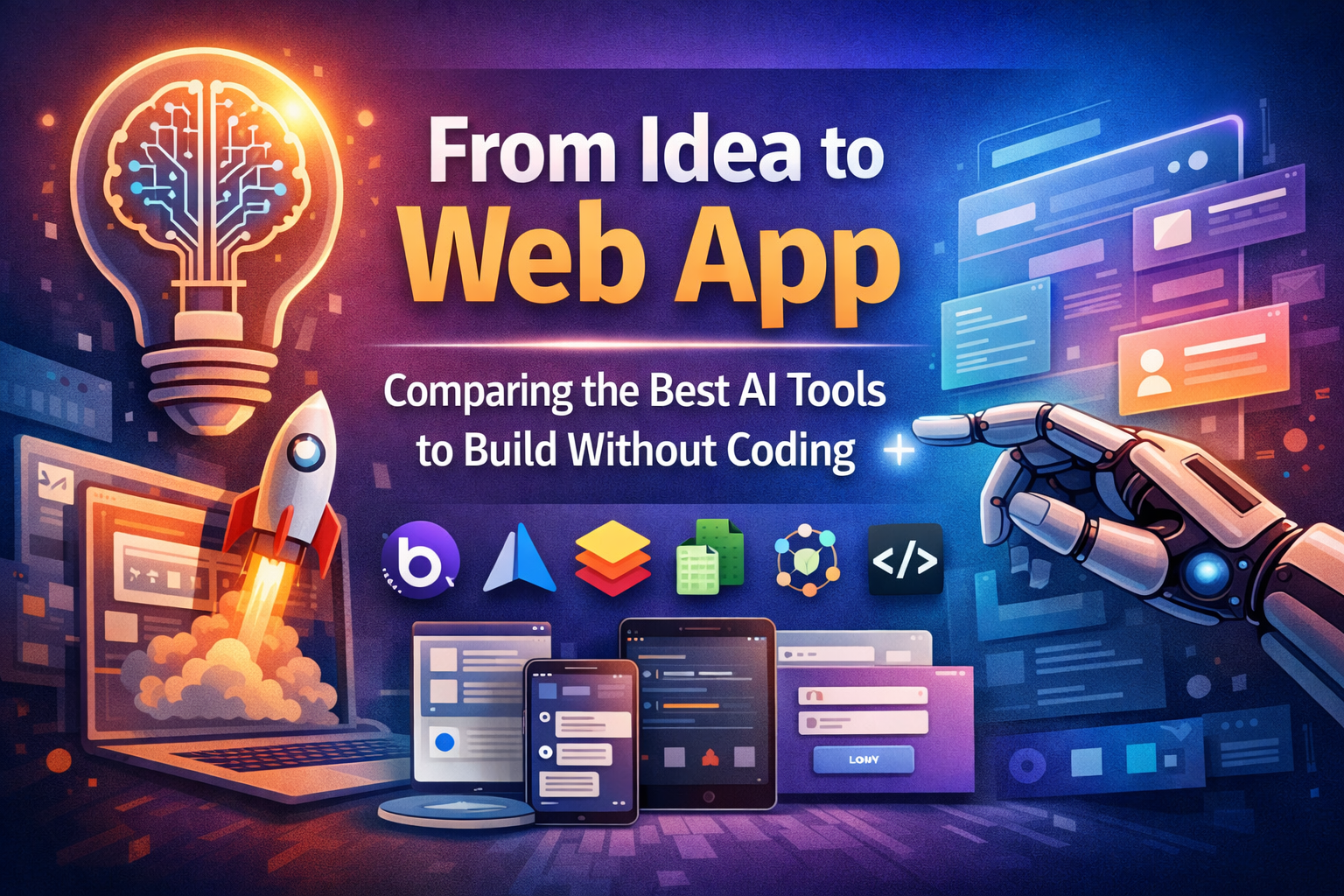
The way web apps are built is changing fast. What used to require a technical co-founder, a full stack of tools, and months of development can now start with a simple sentence:
“I want to build a web app that does this.”
AI-powered platforms take that sentence and turn it into interfaces, workflows, databases, and live applications. But while the promise sounds the same, the tools behind it are very different. Some prioritize speed above all else. Others focus on structure, scalability, or long-term control.
To understand which tools actually work—and when—it helps to look at the landscape as a whole.
The Platforms Shaping AI-First Web App Creation
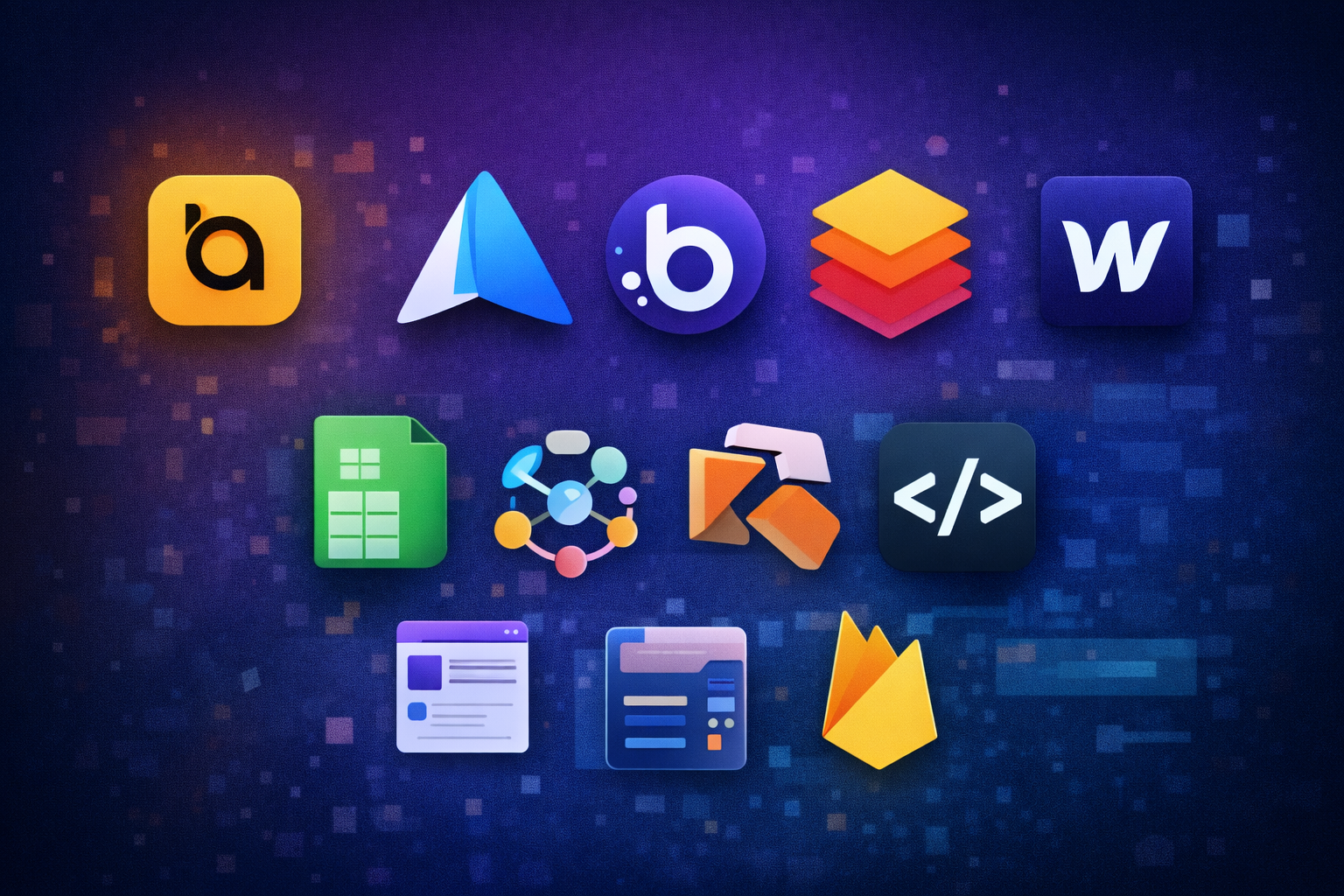
Base is a good example of the new prompt-first mindset. You describe the product in natural language, refine it through conversation, and quickly arrive at a working app. It’s ideal for early ideas, demos, and MVPs where speed matters more than perfection.
Horizon sits on the other end of that spectrum. While it uses AI to accelerate development, it emphasizes data models, workflows, and predictable logic. It’s better suited for structured products, especially internal tools or B2B platforms that need clear rules and permissions.
Bubble remains one of the most powerful no-code platforms available. With its growing AI features, it bridges the gap between visual building and intelligent automation. It takes longer to master, but it’s capable of supporting full-scale SaaS businesses.
Framer approaches the problem from a design perspective. Its AI tools help generate layouts, interactions, and responsive experiences quickly. It’s perfect for product showcases, interactive MVPs, and frontend-heavy apps where user experience is critical.
Webflow, enhanced with AI, plays a similar role but with more control over structure and performance. While it’s not a full backend solution on its own, it integrates well with databases, automation tools, and APIs to form complete products.
Glide focuses on turning data into applications. By combining spreadsheets or databases with AI-assisted logic, it enables teams to build internal tools, dashboards, and simple SaaS products without engineering effort.
Softr is especially popular for marketplaces, portals, and membership-based apps. Its AI features simplify setup while keeping everything organized around structured data sources.
Retool, with its AI capabilities, is designed for operational software. It’s not for public-facing products as much as it is for internal systems that need speed, reliability, and control.
Replit, paired with AI coding assistants, represents a hybrid path. It allows founders and builders to generate production-ready code using AI while retaining full ownership and flexibility. It’s ideal for those who want speed without platform limitations.
Firebase, when combined with AI tooling, remains one of the fastest ways to build scalable web apps. While more technical, it offers unmatched backend power for teams planning long-term growth.
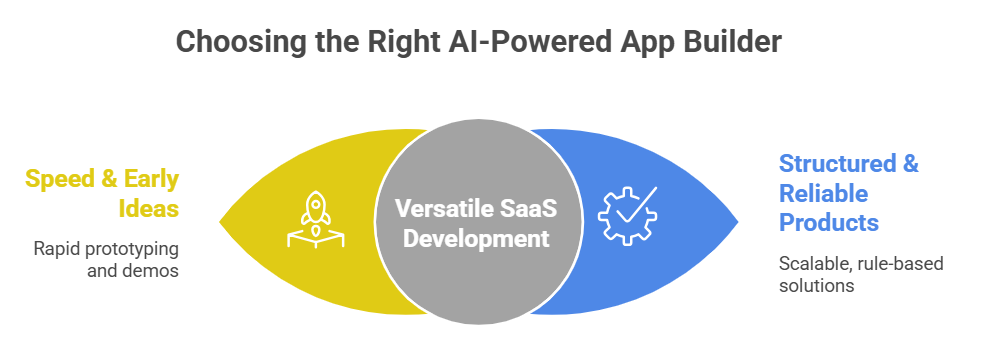
Which Tools Are Best (and When)
If your goal is to validate an idea or build an MVP fast, platforms like Base, Framer, and Glide are hard to beat. They minimize setup and let you focus on the product itself.
For structured B2B tools or internal platforms, Horizon, Retool, and Softr offer more control and predictability without sacrificing speed.
If you’re building a long-term SaaS product, Bubble and Firebase (with AI) provide the flexibility and depth needed to scale.
And if you want maximum control with AI acceleration, Replit is the strongest option especially for technical founders.
The Bigger Picture
These tools aren’t just making development faster. They’re changing who gets to build.
Founders can validate ideas without engineers. Designers can ship real products. Teams can create internal software without waiting in a backlog. AI is turning software creation into a product-thinking exercise rather than a purely technical one.
The future of web apps won’t be defined by who writes the best code but by who asks the best questions.

Ariel Gal is a digital strategist specializing in scalable web platforms, SEO architecture, automation, and AI-enabled growth. His work focuses on turning complex digital systems into reliable business infrastructure.